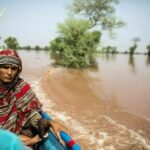



Pakistan suffers average annual losses of over $2 billion due to disaster events, according to the Asian Development Bank (ADB), as the country remains among the most climate-vulnerable in the region and the world.
ADB committed a total of $40 billion to support development across Asia and the Pacific—comprising $24.3 billion from its own resources and $14.9 billion through co-financing with partners.
For Pakistan, ADB signed a $500 million policy-based loan to strengthen the country’s capacity for disaster planning, preparedness, and response. The program supports disaster risk mapping and modeling, mobilizes public and private financing for risk reduction and climate resilience, and improves coordination for disaster monitoring and response.
The program also marks the first use of ADB’s contingent disaster financing facility in Central and West Asia, enabling rapid disbursements following a disaster.
ADB is also working with India, Pakistan, and Uzbekistan to develop city-level climate action plans aimed at managing climate risks and cutting greenhouse gas emissions.
Additionally, ADB committed $330 million to expand a grassroots social protection program in Pakistan, targeting 9.3 million people—especially poor women and their families. The initiative will enhance poverty targeting, provide conditional cash transfers for children’s education, and improve access to healthcare and nutrition in disaster-prone areas.
The report also noted that countries like Afghanistan, the Kyrgyz Republic, and Pakistan continue to face high poverty levels and limited access to essential services, while Pakistan’s rapidly growing urban population contends with declining living standards, poor public services, and the compounding impacts of climate change.